

Working Together
Support that continues between sessions
Executive-function skills develop through practice in everyday life, not just what happens during a session.
We work together to identify what matters, develop practical strategies and put them into action in the student’s real school or university life.
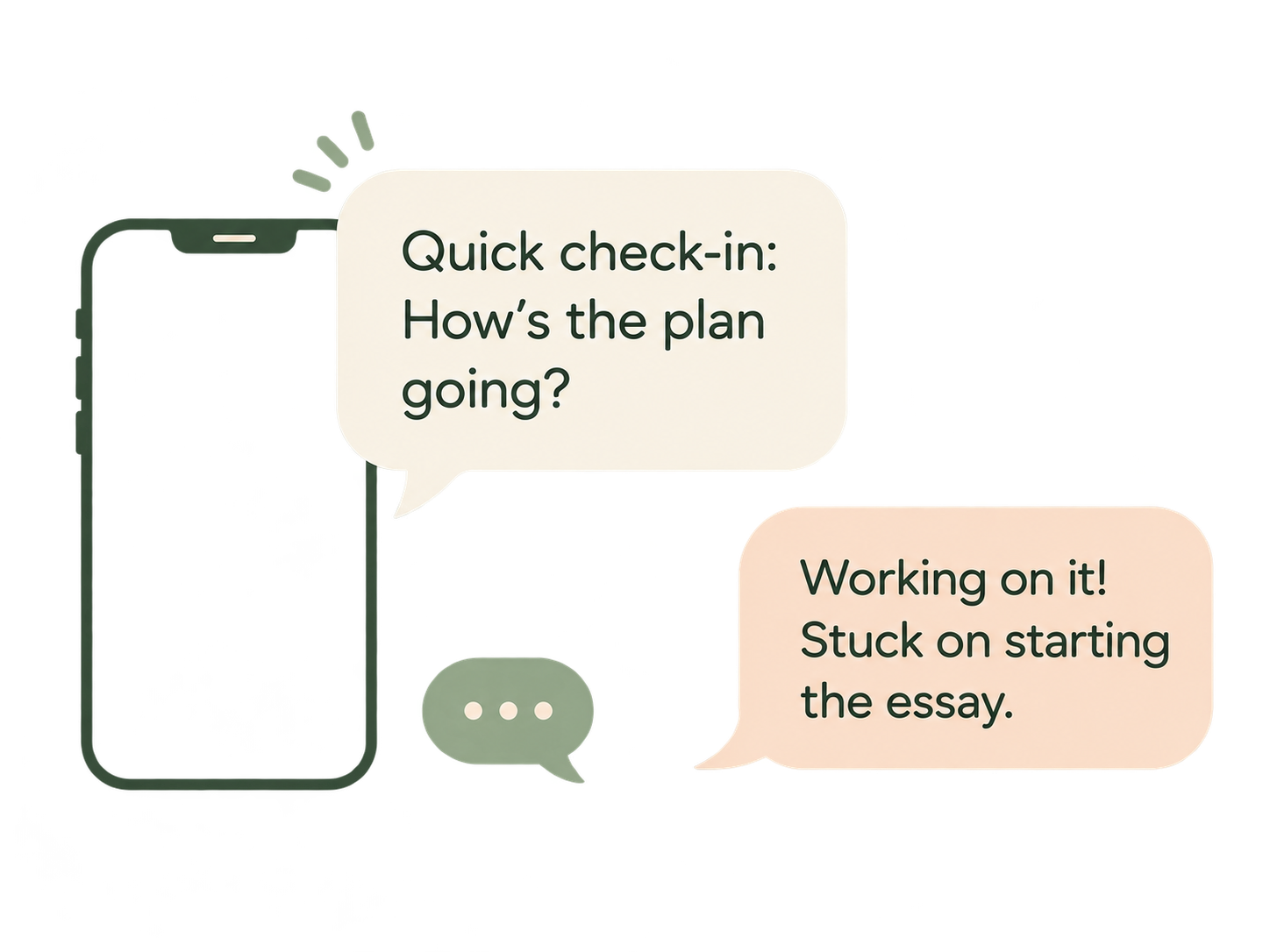
Early on, brief check-ins between sessions may be more frequent while a new strategy is being established. As the student becomes more confident using it independently, that support is gradually reduced.
This real-time support builds momentum, problem-solves obstacles early and helps new habits stick.

Relationship first. Support is collaborative, not prescriptive. Students have a genuine voice in what we work on and the strategies they choose to try.
Connect
———
Start with the student.
We look at what is happening now, what matters to the student and where things are getting stuck.
What working together looks like
The process is collaborative and flexible. We try something, notice what happens and adjust as we learn more about what works for the student.
Choose
———
Decide what would be useful to work on.
Together, we choose a manageable focus and turn it into a practical plan the student is willing to try.
Try
———
Put the strategy into real life.
The student puts the strategy into practice between sessions, with brief check-ins when useful.
Review & adjust
———
Notice what happened and decide what comes next.
We work out what helped, what got in the way and what to change. As independence grows, prompts and check-ins gradually reduce.
The practical side
Support is structured around the student, with regular sessions, real-life practice and brief contact between sessions when useful.
What’s included
One-to-one executive-function coaching
A focus based on what matters most right now
Practical strategies and action planning
Between-session practice in real life
Brief check-ins by text message or email when useful
Resources and tools to support strategy use and skill development
Progress reviewed and support adjusted over time
Communication with families where appropriate to the student’s age and independence
How support works
Sessions give us time to identify priorities, work through obstacles and develop practical strategies.
Between sessions, the student puts those strategies into practice in everyday life. When a new approach is being established, brief check-ins by text or email may initially happen daily or near-daily.
These check-ins are short and focused. They help students stay on track in real life, with more detailed problem-solving kept for our sessions. As the student needs less prompting, they gradually reduce.
For families
Parents and caregivers can be important partners, particularly for younger students.
Where appropriate, I may communicate with families about progress, or ways to support strategies at home, while ensuring the student remains an active participant in choosing goals and strategies.
As the student develops greater independence, adult prompting and involvement reduce too.
Building independence over time
Support is designed to fade.
Some students may initially need more structure, prompting and frequent check-ins while they are learning and establishing a new strategy. As skills and confidence develop, that support gradually reduces.
Support shifts from external structure and cues towards the student creating, using and adjusting their own systems.
Over time, the student takes greater responsibility for deciding what to try, noticing what is working and making changes when something does not go to plan.
The goal is for students to build a repertoire of strategies they understand, can adapt and increasingly know when to use for themselves.
More support
Clear structure, modelling, prompts and frequent check-ins.
→
→
Shared responsibility
The student practises choosing strategies and evaluating what works.
Greater independence
Prompts fade and the student increasingly manages the process themselves.
Ready to talk?
You don’t need to know exactly what kind of support is needed before getting in touch.
Tell me a little about the student, what’s currently getting in the way and what you would like to see change. We can then work out whether executive-function coaching might be a good fit.
Melbourne CBD, Northcote & Online